Administración Comercial
The platform where Corbeta negotiates, reviews, settles and collects its commercial agreements with the suppliers behind Alkosto, Ktronix and Kalley.
Where every supplier deal is negotiated, checked and paid.
Large retailers earn a big share of their margin from supplier agreements: volume rebates, advertising support, logistics discounts. Corbeta manages them as PACs (the annual commercial plan with each supplier) and ExtraPACs (one-off deals tied to a commercial event).
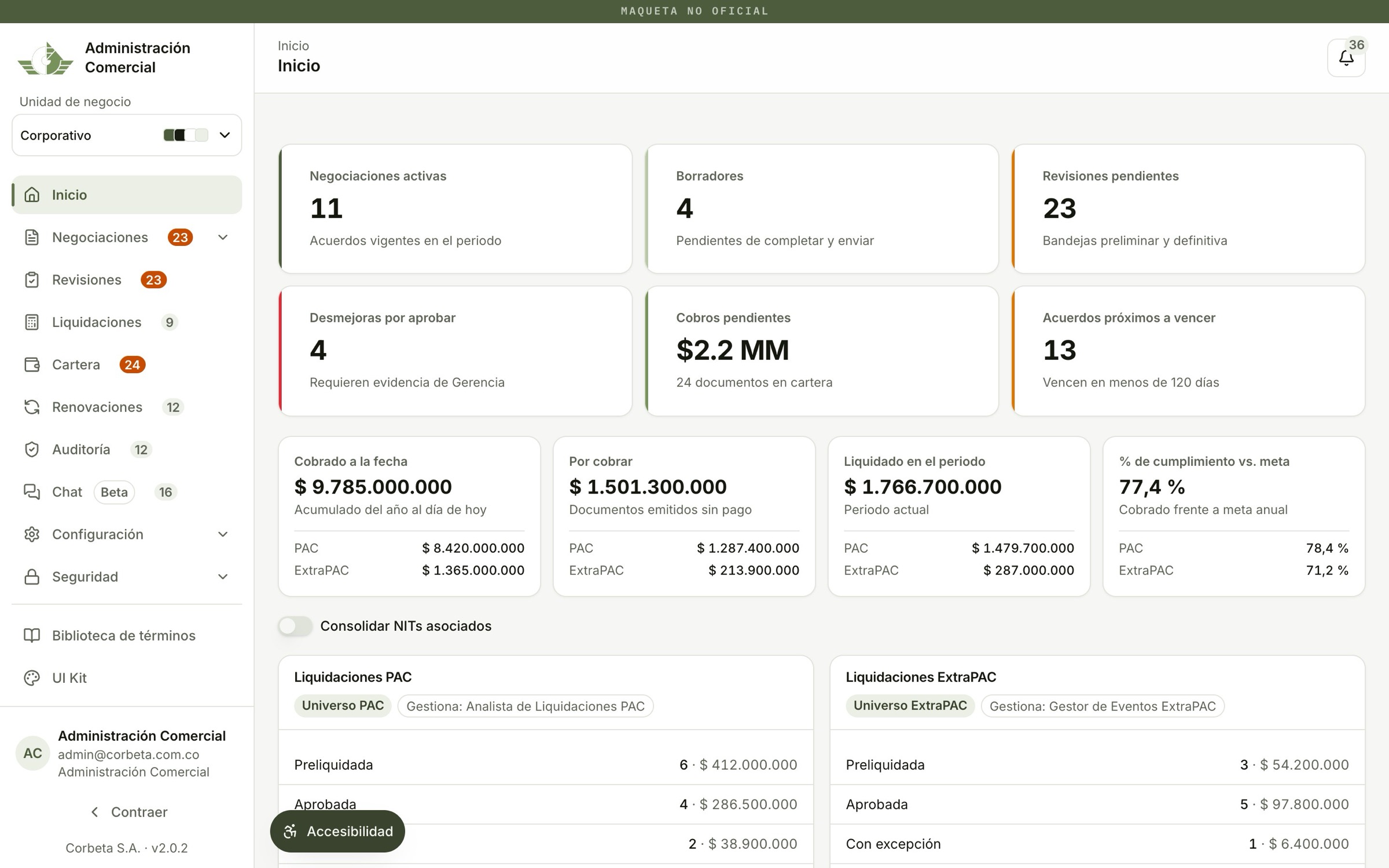
I designed the platform that holds the whole lifecycle together, from negotiation and review to settlement, collections, renewals and audit. I worked from the client's use cases, through Figma, to a functional prototype the commercial team tested end to end.
A spreadsheet process with millions on the line.
One PAC can span several business units, categories, brands and products, each with its own concepts, dates and calculation rules. Mistakes surface months later as disputes with the supplier, and with no clear trace of who decided what, they're hard to resolve.
What I designed, and why.
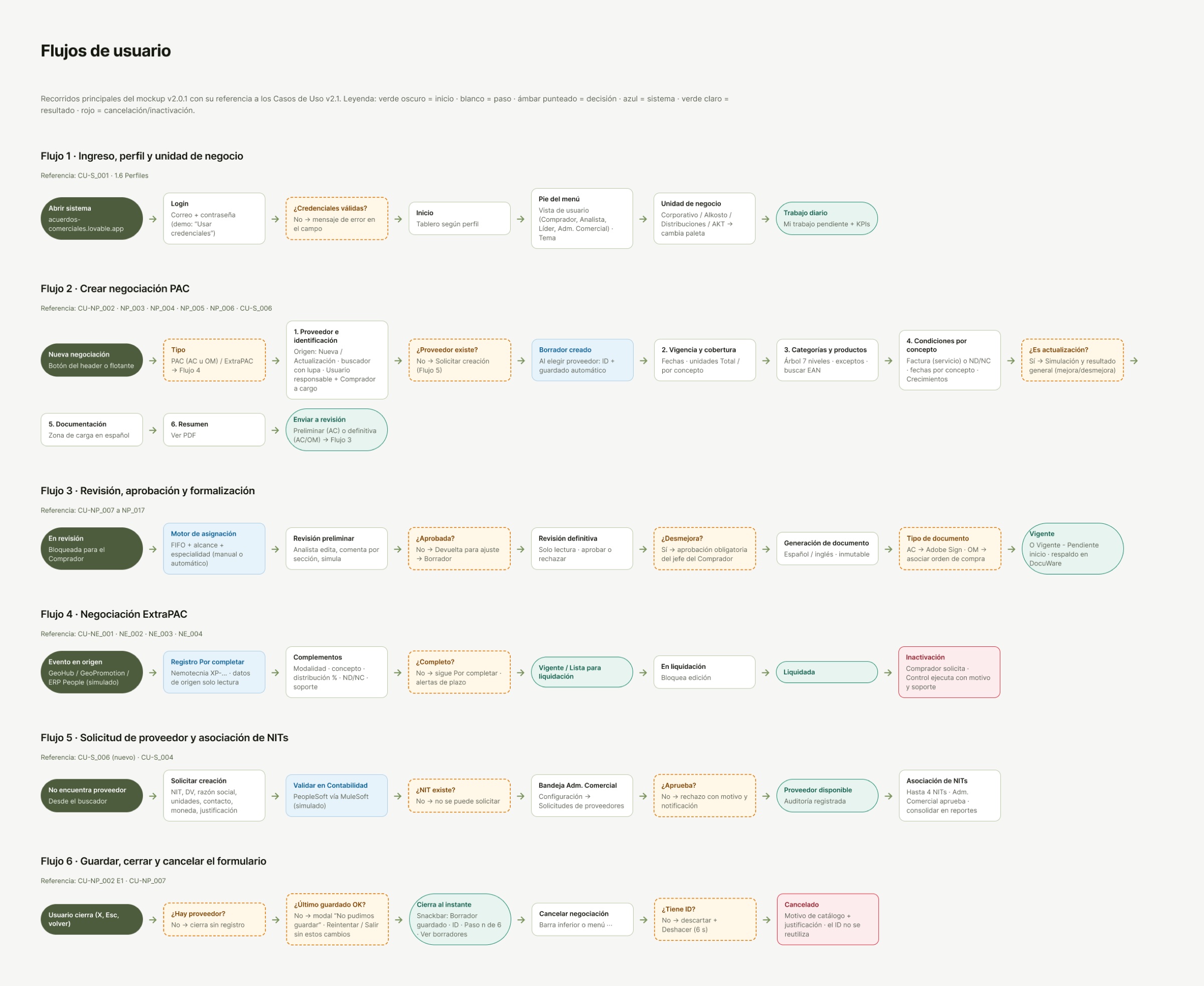
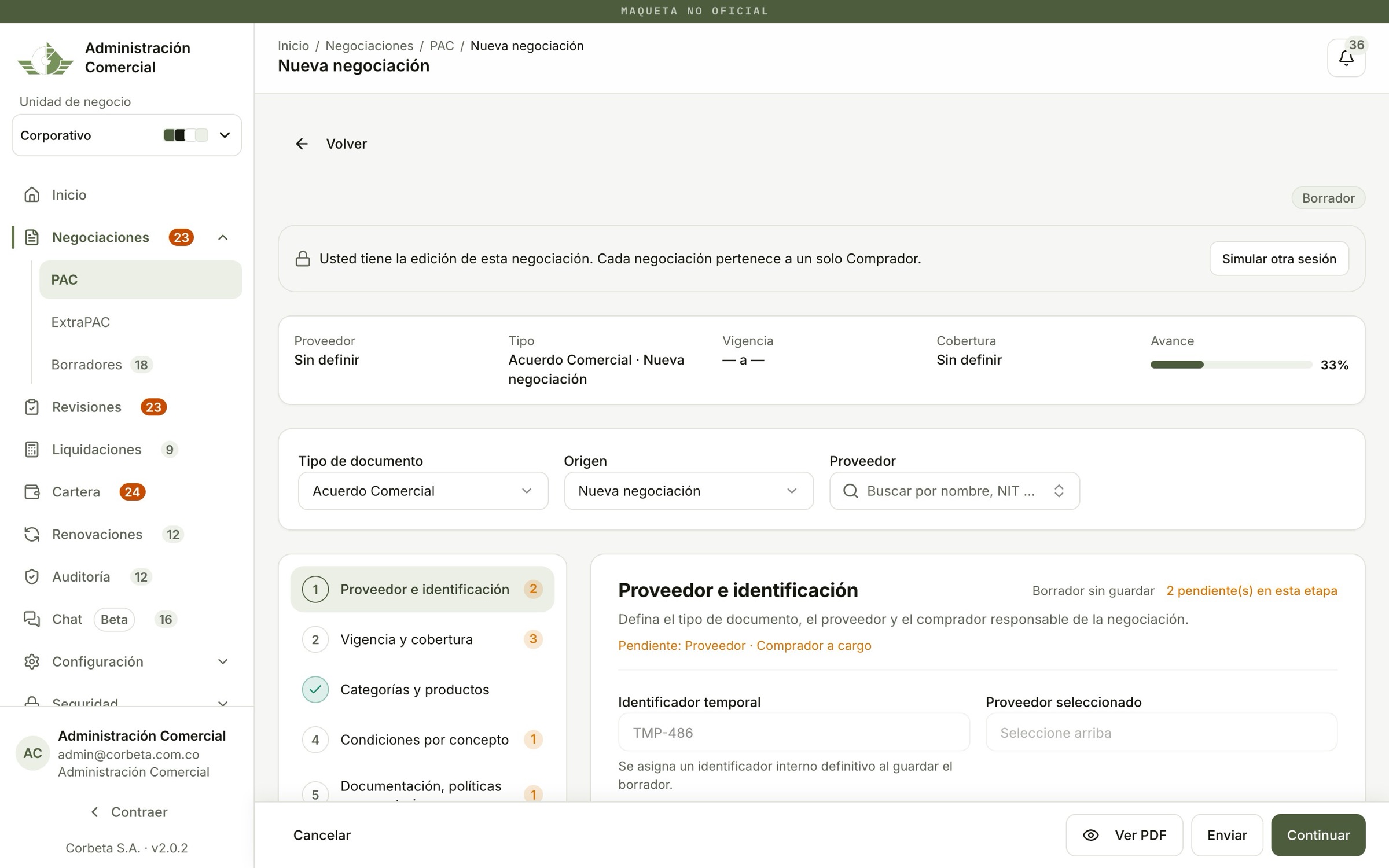
- A guided negotiation in 6 steps (supplier, validity and coverage, categories, conditions, documents, summary) instead of one giant form
- Saving is unlocked as soon as a supplier is chosen, with autosave, drafts and Undo, so nobody loses work
- An explicit review chain (preliminary, then final) with an assignment engine and mandatory approval when terms get worse
- Coverage as a 7-level tree with multi-EAN search, so deals can target a whole unit or a single product
- Full traceability: cancellations keep their ID and reason, and every change is audited
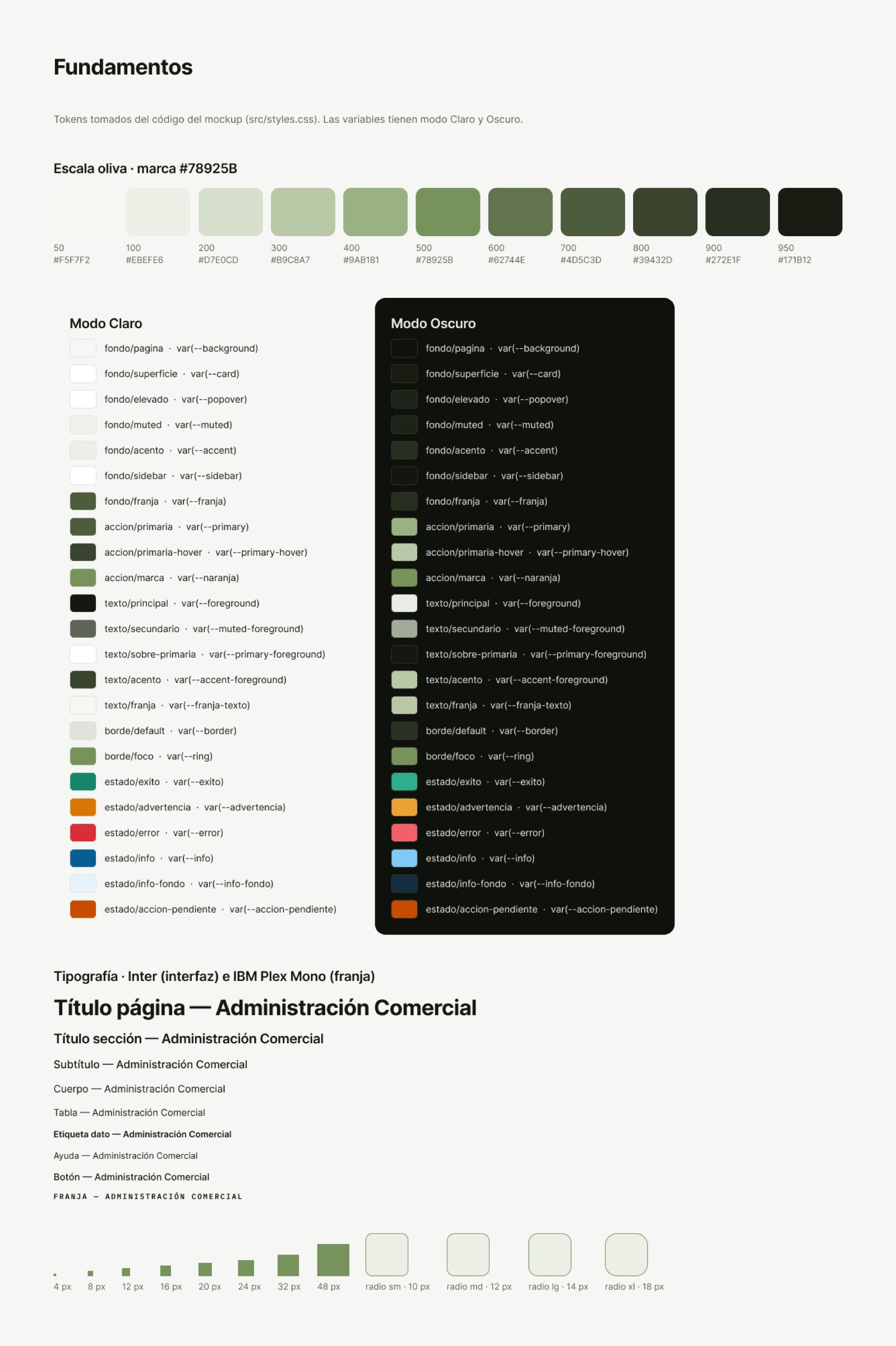
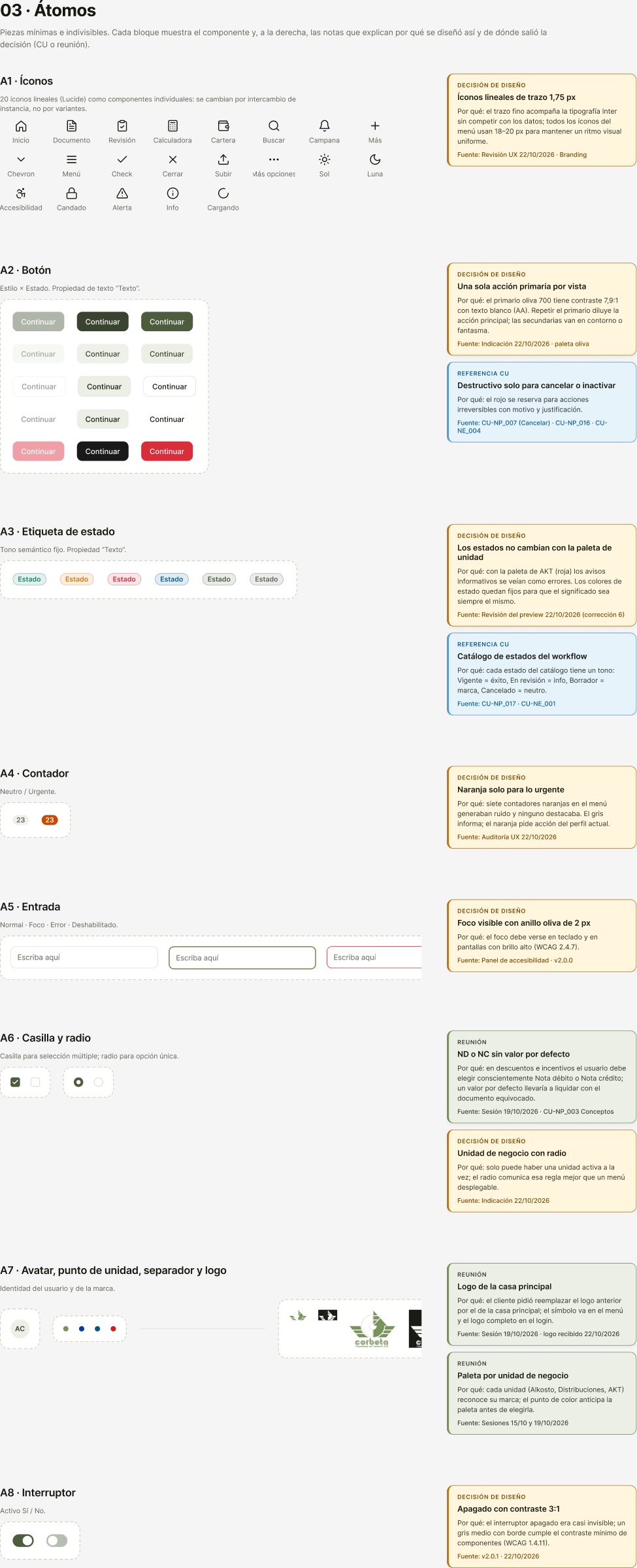
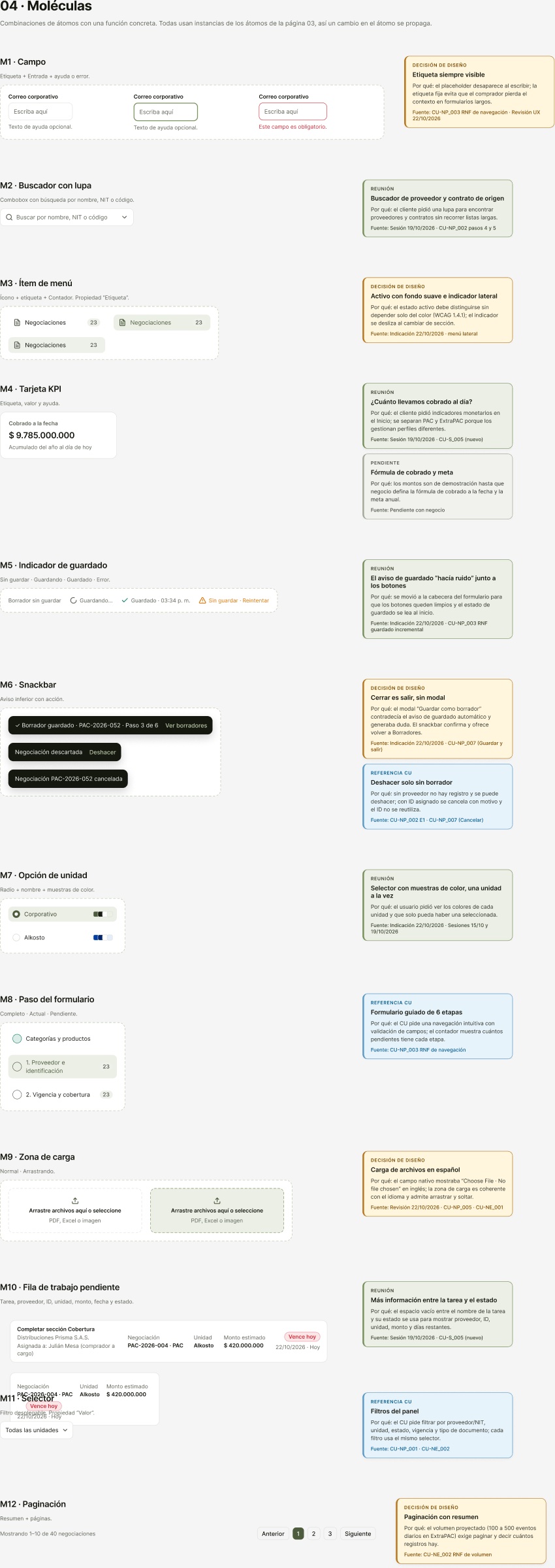
Atomic design, from brand to organisms.
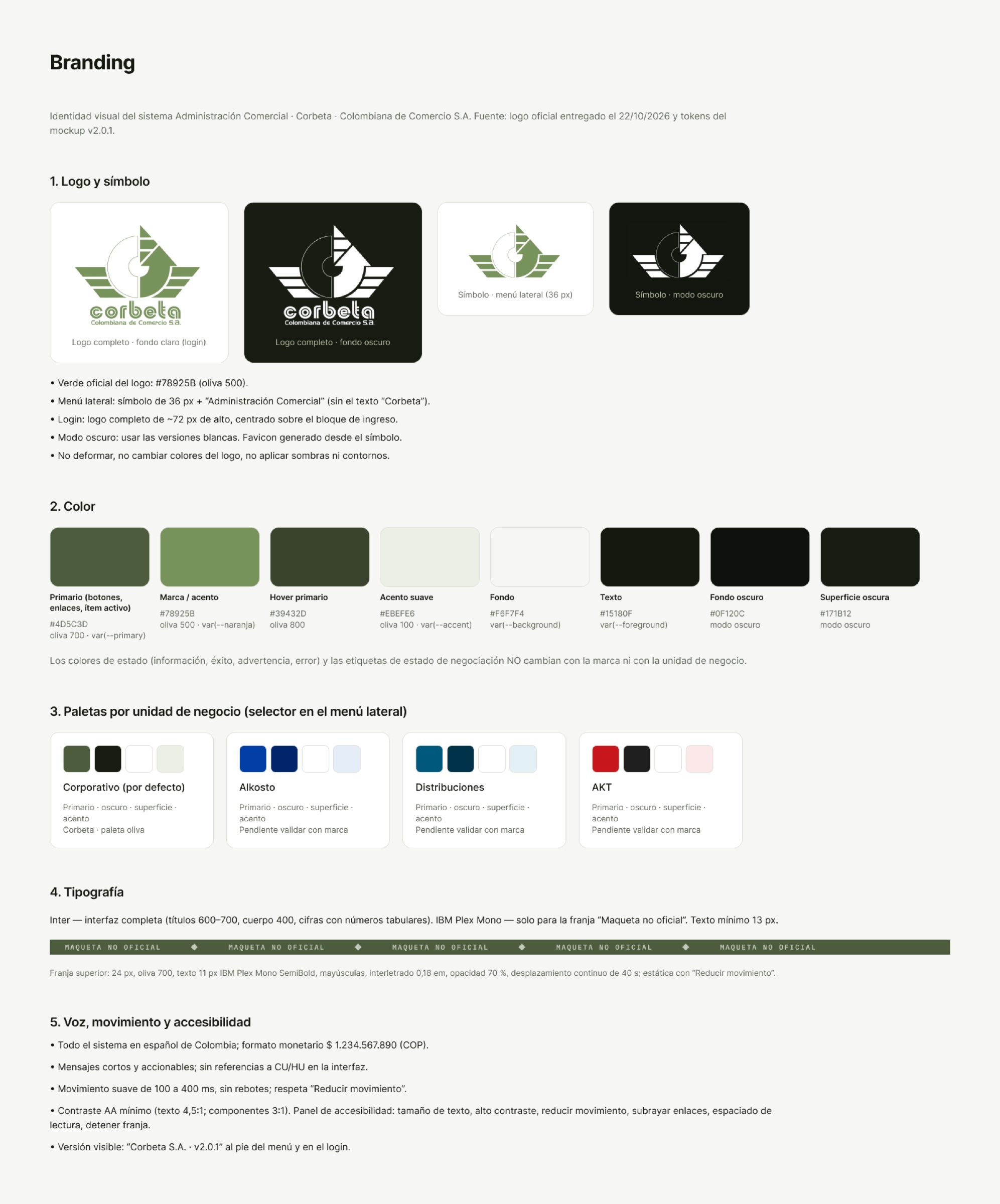
The Figma file follows atomic design: branding with palettes for each business unit, foundations with light and dark tokens, then atoms, molecules and organisms. Every component carries a design note explaining the decision behind it, its source and the version it shipped in. Desktop, tablet and mobile layouts are documented, along with a breakdown of every screen by use case.
Shipped in versions, tested by the client.
The prototype went through versioned releases up to v2.0.2, each one checked on desktop, mobile and dark mode, with accessibility preferences saved on the device. Corbeta's commercial team ran negotiations from draft to settlement and signed off on the flows before engineering connected the APIs.
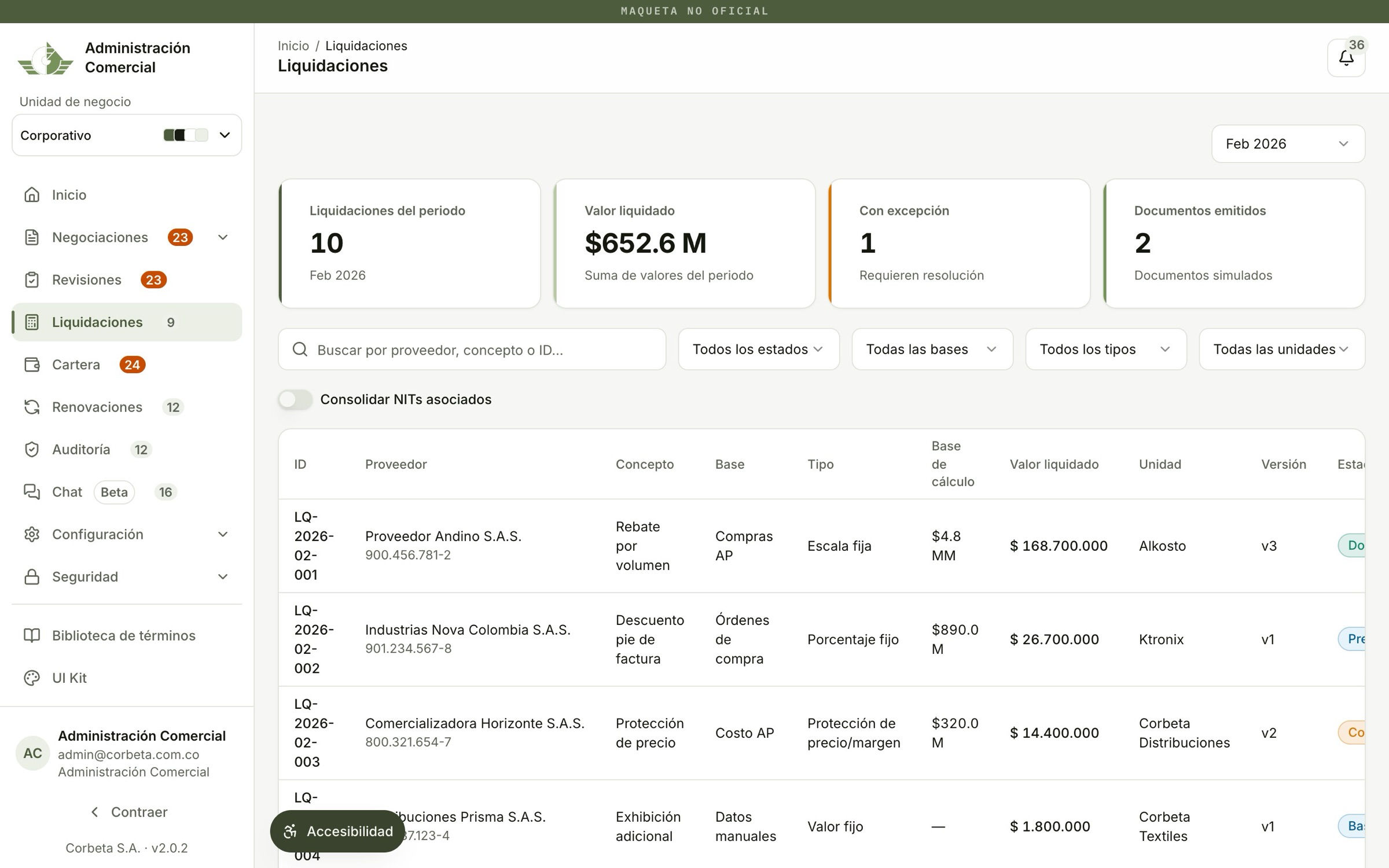
From spreadsheets to a traceable workflow.
The client validated a complete, working product instead of static screens. Engineering received a documented atomic design system and flows mapped one-to-one to the use cases, ready to connect to the APIs.